Tooth Extraction in Vasant Kunj: Procedure, Cost, Recovery & Aftercare

A dentist may recommend tooth extraction if a patient has a serious dental infection or severe tooth decay or persistent tooth pain. Extraction may also be necessary if a tooth is fractured and cannot be repaired. If the affected tooth cannot be saved or may harm the surrounding teeth then the dentist may suggest removing it. However the dentist always tries to preserve natural teeth whenever possible.
If you are looking for tooth extraction services in Vasant Kunj or other areas of South Delhi. you can make an informed decision by gathering information about the procedure, costs, recovery time and aftercare.
During a professional dental examination at ‘Dental Arch‘ in Vasant Kunj, patients can gain an understanding of their dental issues and learn about appropriate treatment options. Depending on the position and location of the affected tooth, as well as your overall health, it is determined whether you require a simple procedure or a complex surgical procedure to have the tooth removed.
This article provides all the information you need regarding tooth extraction—including the various methods used, potential costs, the recovery process and the precautions to be taken following the procedure.
What Is Tooth Extraction?
Tooth extraction is a dental procedure in which a dentist removes a tooth from its socket in the jawbone. A tooth may need to be removed if it is severely damaged or infected or has become loose. Extraction may also be recommended when the problem cannot be treated with other dental procedures and the tooth cannot be saved.
The dentist may use either a simple or surgical technique to extract the tooth based on its position and location.
When Do You Need a Tooth Extraction?
Not every toothache requires extraction. Many dental problems can be treated with fillings or root canal treatment and crowns to help preserve the natural tooth.
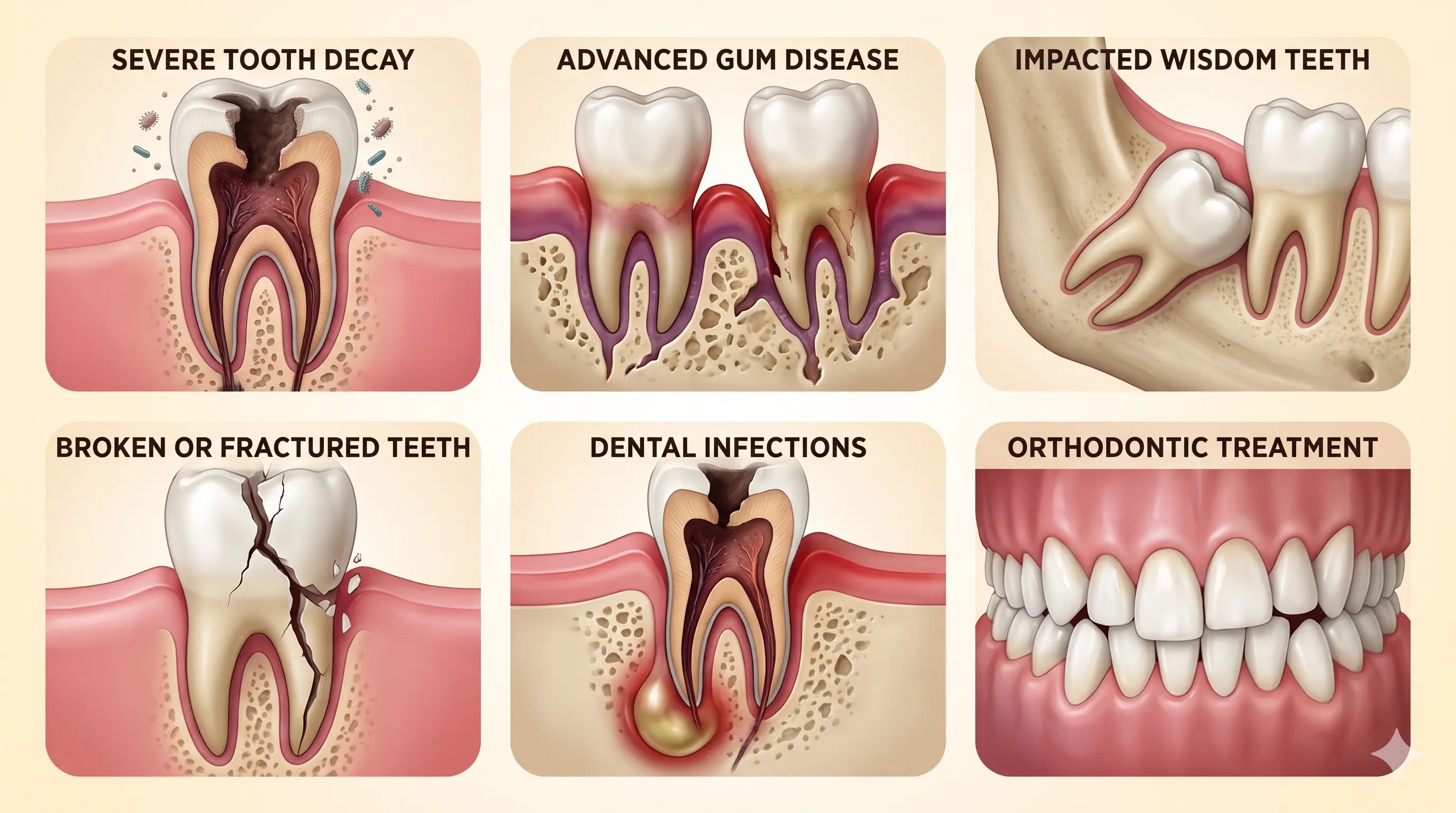
Tooth extraction may be recommended in the following situations.
Severe Tooth Decay
When decay starts spreading deep into the tooth structure and causes extensive damage the tooth may become difficult or impossible to restore.
Advanced Gum Disease
When gum disease progresses to an advanced stage the supporting bone may deteriorate and cause teeth to become loose.
Impacted Wisdom Teeth
When wisdom teeth do not have enough space to emerge properly they may become impacted and cause pain or other dental problems.
Broken or Fractured Teeth
When a tooth becomes fractured due to an accident or injury it may require extraction if the damage is too severe to repair.
Dental Infections
When a dental infection becomes severe and the tooth cannot be saved with root canal treatment extraction may become necessary.
Orthodontic Treatment Requirements
When there is insufficient space in the jaw for proper teeth alignment extraction may be recommended as part of orthodontic treatment.
Also Read
Types of Tooth Extraction Procedures
There are two main types of tooth extraction procedures. The method chosen depends on the tooth’s position, its condition and the structure of its root.
Simple Tooth Extraction
A simple extraction (tooth removal) is performed when the affected tooth is visible above the gum line and is easily accessible.
Surgical Tooth Extraction
A surgical extraction is required when a tooth cannot be removed through a simple extraction technique.
During the procedure the dentist or oral surgeon may make a small incision in the gum tissue. In some cases a small amount of surrounding bone may need to be removed. The tooth may also be divided into smaller sections to make removal easier. The area is cleaned after extraction and stitches may be placed when required.
Tooth Extraction Procedure: What Happens During Treatment?
If you are planning to have a tooth extracted near Vasant Kunj then understanding the treatment process can help reduce your confusion and anxiety.
Here is what typically happens during an appointment for a tooth extraction.
Step 1- Dental Examination
The dentist examines your teeth and gums along with the surrounding tissues. Dental X-rays may be recommended to evaluate the tooth roots and bone structure as well as the position of the affected tooth.
Step 2- Treatment Planning
After the examination the dentist explains whether a simple or surgical extraction is appropriate.
If the tooth can be saved through another treatment such as root canal treatment or a dental crown then those options may also be discussed.
Step 3- Local Anaesthesia
Local anaesthesia is administered to numb the treatment area. You may feel pressure or movement during extraction but you should not experience sharp pain.
Inform your dentist if you feel any discomfort during the procedure.
Step 4- Tooth Removal
The dentist carefully loosens and removes the affected tooth using the appropriate extraction technique.
The duration depends on the complexity of the case.
Step 5- Cleaning and Bleeding Control
After removal the socket is examined and cleaned when necessary. Gauze is placed over the extraction site to help form a blood clot and control bleeding.
Stitches may be used for certain surgical extractions.
Step 6- Post-Extraction Instructions
Before leaving the clinic you receive instructions about managing discomfort and eating safely. You will also learn how to clean your mouth and protect the extraction site during recovery.
How Much Does Tooth Extraction Cost in Vasant Kunj, Delhi?
One of the most common questions patients ask before treatment is “How much will it cost to have a tooth extracted?”
The cost of having a tooth extracted can vary; it depends on the method used- The condition of the tooth and the complexity of the procedure.
A simple extraction generally costs less than a surgical extraction because surgical procedures may require additional steps such as a gum incision or bone removal or stitches.
Estimated Tooth Extraction Cost in Delhi
The following table provides indicative private-clinic price ranges for Delhi in 2026.
| Type of tooth extraction | Estimated cost |
|---|---|
| Simple tooth extraction | ₹500–₹3,500 |
| Surgical tooth extraction | ₹2,500–₹9,000 |
| Impacted wisdom tooth extraction | ₹4,500–₹11,000+ |
| Complex wisdom tooth surgery | ₹8,000–₹15,000+ |
*These are indicative estimates and not confirmed treatment prices from Dental Arche. Actual fees depend on clinical examination and the complexity of the treatment.
Factors That Affect Tooth Extraction Cost
Several factors influence the final treatment cost.
Type of extraction
Simple extractions are generally less expensive than surgical procedures.
Position of the tooth
A fully erupted tooth is usually easier to remove than an impacted tooth or a partially erupted tooth.
Complexity of the case
Curved roots or fractured teeth and complicated wisdom tooth positions may require additional surgical steps.
Diagnostic tests
Dental X-rays or other imaging tests may be needed before treatment.
Specialist involvement
Complex cases may require treatment from an oral and maxillofacial surgeon.
Additional treatment
The total cost of treatment may increase due to medications, stitches and follow-up visits. Options for tooth replacement can also add to the expense..
If you are comparing the tooth removal cost near me then ask the dental clinic for an itemised estimate. Confirm whether the consultation and X-rays are included. Also check whether anaesthesia and the procedure as well as follow-up care are covered.
How Long Does It Take to Recover After Tooth Extraction?
Recovery time depends on the type of extraction and your general health as well as how well you follow post-treatment instructions.
A simple extraction generally has a shorter recovery period. Surgical wisdom tooth removal may require additional healing time.
Tooth Extraction Recovery Timeline
Understand what to expect during each stage of recovery after tooth extraction.
First 24 hours
A blood clot forms in the extraction socket. Mild bleeding or tenderness and discomfort may occur.
Days 2–3
Swelling and discomfort may become more noticeable after surgical extraction. However these symptoms should gradually begin to improve.
Days 4–7
Most routine extraction sites become more comfortable. Gum healing continues during this period.
1–2 weeks
Many patients experience substantial improvement in soft-tissue healing. Surgical cases may require more time to heal.
Following weeks
The underlying bone continues to heal and remodel. Complete socket healing can take several weeks or longer.
This timeline provides general guidance only. Individual recovery varies and may take longer after impacted wisdom tooth surgery.
Tooth Extraction Aftercare: What Should You Do?
Proper aftercare is important for preventing complications and supporting healing.
After your tooth extraction appointment- follow the instructions provided by the dentist near you.
Tips for a Smooth Recovery After Tooth Extraction
Follow these important aftercare recommendations to support healing and protect the extraction site.
1. Protect the Blood Clot
A blood clot forms inside the extraction socket and protects the underlying tissues during healing.
Avoid disturbing it by:
- Avoiding vigorous rinsing during the first 24 hours.
- Avoiding forceful spitting.
- Not touching the extraction site with your fingers or tongue.
- Avoiding drinking through a straw.
2. Eat Soft Foods
Choose foods that require minimal chewing during the initial recovery period.
Some suitable options include:
- Curd and yoghurt.
- Mashed potatoes.
- Soft khichdi.
- Scrambled eggs.
- Smooth soups that are not too hot.
- Soft, well-cooked vegetables..
Avoid hard, crunchy, sticky and very hot foods until your dentist advises that you can return to your normal diet.
3. Maintain Oral Hygiene
Keeping your mouth clean helps support healing.
Continue brushing your other teeth carefully, but avoid disturbing the extraction site.
After the first 24 hours, gentle warm salt-water rinses may be recommended, particularly after meals. Follow your dentist’s specific instructions.
4. Avoid Smoking and Alcohol
Smoking and tobacco use can interfere with healing and increase the risk of dry socket.
Avoid smoking, vaping and alcohol during the initial recovery period and follow your dentist’s advice about when it is safe to resume.
5. Take Medication as Prescribed
Your dentist may recommend pain relief medication or other medicines depending on your condition.
Take medicines only as advised. Antibiotics are not automatically required after every tooth extraction.
6. Avoid Strenuous Physical Activity
Rest during the initial recovery period. Avoid heavy exercise and activities that may increase bleeding, particularly during the first 24 hours.
What Are the Possible Complications of Tooth Extraction?
Tooth extraction is a common dental procedure but it can sometimes lead to complications. One potential complication is a ‘dry socket,’.
Dry socket occurs when the protective blood clot is removed or does not form properly after tooth extraction. This leaves the underlying bone exposed and can cause severe pain. The patient may notice increased pain a few days after the extraction.
The pain may spread to the ear or jaw. The patient may also experience a bad taste or smell in the mouth. This condition can also delay the healing of the extraction site.
Another potential issue following a tooth extraction is that the site from which the tooth was removed may become infected. This infection can lead to increased swelling and pain that either fails to improve or worsens.
The patient may also develop a fever or pus may appear around the area where the tooth was extracted. You may experience an unpleasant taste in your mouth and generally feel unwell.
It is normal to experience some bleeding after having a tooth extracted. For a period of time following the procedure the patient may notice a small amount of blood in their saliva. However, in the event of excessive bleeding or if the bleeding does not stop, you may need to seek medical assistance from a dentist.
In some complex procedures to remove a lower wisdom tooth, the nerves located near the roots of the tooth may be affected. These nerves control sensation in the lower lip, chin and tongue.
If these nerves are affected, the patient may experience temporary numbness or a tingling sensation in these areas. In some cases these symptoms may last longer. The dentist or oral surgeon can explain the possible risks after examining the patient’s X-rays.
Seek urgent medical attention if you experience difficulty breathing or swallowing, rapidly increasing facial swelling or uncontrolled bleeding.
When Should You Consult an Oral Surgeon?
Not every tooth extraction requires an oral surgeon. A general dentist can perform many routine extractions.
An oral surgeon may be needed for:
Deeply impacted wisdom teeth.
Teeth positioned close to important nerves.
Complicated root structures.
Teeth fractured below the gum line.
Complex surgical extraction requirements.
Previous unsuccessful extraction attempts.
When choosing a specialist, check their qualifications, relevant surgical experience and the diagnostic facilities available at the clinic.
What Are the Alternatives to Tooth Extraction?
Removing a natural tooth is not always the first treatment option.
Depending on the condition, your dentist may recommend treatments that preserve the original tooth.
Root Canal Treatment
If the tooth pulp is infected or damaged but the tooth can still be restored, root canal treatment may help preserve it.
Dental Crown
A dental crown can protect and restore a damaged tooth when sufficient healthy tooth structure remains.
Dental Filling
For cavities that have not caused extensive structural damage, a dental filling may be sufficient.
Gum Treatment
If a tooth is affected by gum disease, periodontal treatment may help control the infection and preserve supporting tissues in suitable cases.
The right approach depends on the clinical examination. If a tooth cannot be predictably saved, extraction may be the more appropriate option.
What Happens After Tooth Extraction? Replacing a Missing Tooth
Explore the available options for replacing a missing tooth after extraction.
After extraction, you may have questions about whether the missing tooth needs replacement.
Leaving a missing tooth untreated can affect chewing function, appearance and the alignment of neighbouring teeth in some cases.
Your dentist may discuss the following options.
Dental implants
A dental implant is placed in the jawbone to support a replacement tooth. It is a fixed option for suitable patients.
Dental bridges
A dental bridge replaces a missing tooth by using support from neighbouring teeth or other appropriate structures.
Removable dentures
Dentures can replace one or more missing teeth and may be suitable depending on the patient’s oral condition.
Not every extracted tooth needs immediate replacement. The decision depends on its location, your bite, overall oral health and treatment goals.
Frequently Asked Questions About Tooth Extraction
Is tooth extraction painful?
Tooth extraction is generally performed under local anaesthesia, which numbs the treatment area. You may feel pressure during the procedure but sharp pain should not be expected. Some discomfort and swelling can occur after the anaesthesia wears off.
How much does tooth extraction cost in Vasant Kunj?
The cost depends on whether you need a simple or surgical extraction. Indicative private-clinic prices in Delhi can range from approximately ₹500 to ₹3,500 for simple extraction and ₹2,500 to ₹11,000 or more for complex surgical procedures. A clinical examination is necessary for an accurate estimate.
How long does it take to heal after tooth extraction?
Initial healing generally takes one to two weeks, although the underlying bone may require several weeks or longer to heal completely. Surgical extractions may require additional recovery time.
Can I eat normally after tooth extraction?
It is better to eat soft foods during the initial recovery period. Avoid hard, crunchy and very hot foods. Gradually return to your normal diet as the extraction site heals and your dentist advises.
When should I visit a dentist after tooth extraction?
Follow the review schedule recommended by your dentist. Contact the clinic- +91 83838 07453, if you experience increasing pain, persistent bleeding, fever, worsening swelling or signs of infection.
Do wisdom teeth always need to be removed?
No. Wisdom teeth do not always require removal. If they are healthy, properly positioned and can be cleaned effectively, they may be monitored. Extraction is considered when there are clinical problems or a clear treatment indication.
Can I search for an oral surgeon near me for wisdom tooth removal?
Yes. If you have an impacted or complicated wisdom tooth, you may need an oral and maxillofacial surgeon. Your dentist can evaluate your condition and recommend specialist consultation when appropriate.
What should I ask before getting a tooth removed?
Ask whether the tooth can be saved, which extraction technique is required, what the estimated cost includes, what risks apply to your case and how long recovery may take.
DENTAL ARCHE
Dental Clinic for Braces, RCT, Tooth Extraction, Invisalign & Implants in Vasant Kunj
DENTAL ARCHE | Vasant Kunj, New Delhi
Contact Dental Arche →