Tooth pain can affect your daily routine. This will make it difficult to even eat, drink or sleep comfortably. Sometimes, persistent tooth pain is caused by an infection inside the tooth, which may require root canal treatment (RCT).
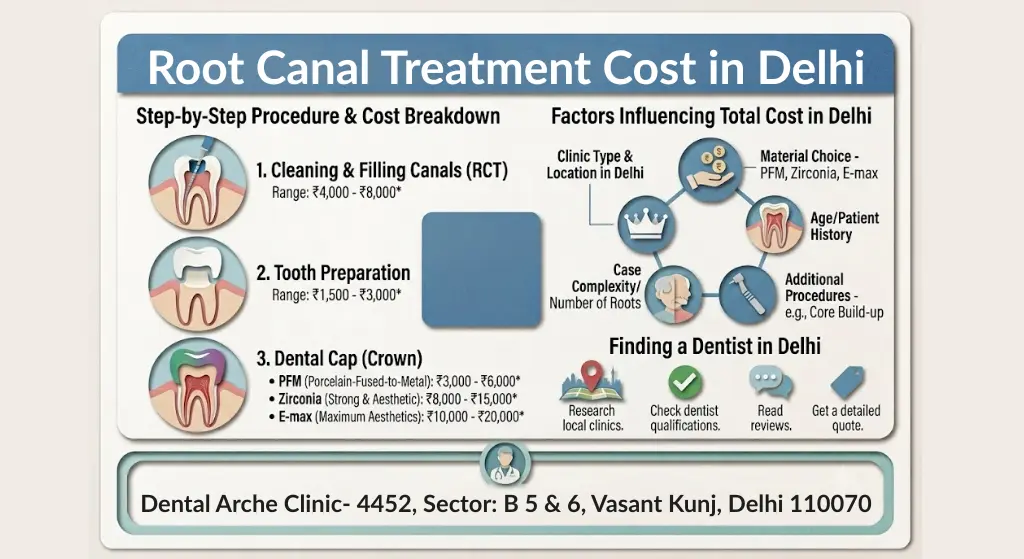
One of the most common questions patients ask before undergoing treatment is “What is Root Canal Treatment Cost with Cap in Delhi?”
The cost of root canal treatment depends on several factors such as the type of tooth, the severity of the infection, the dentist’s experience and the material used for the dental crown.
When deciding to undergo treatment it is important to consider several factors beyond just the cost. If you understand why an RCT is necessary, You can make a better decision once you know how it works and what options are available.
The purpose of this article is to provide information about the cost of root canal treatment with a crown in Delhi, the treatment procedure, its benefits and situations where root canal treatment might not be necessary.
What Is Root Canal Treatment?
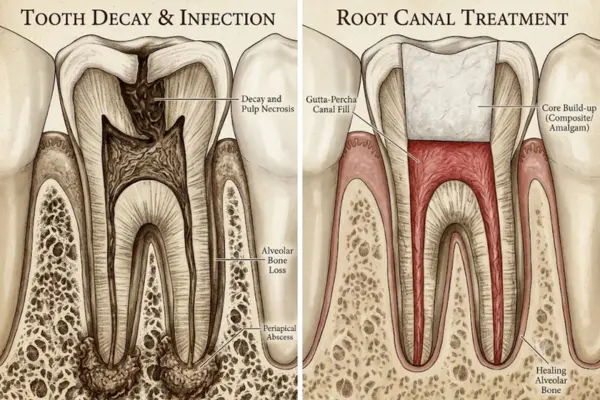
Root canal treatment is a dental procedure used to treat infection or inflammation inside a tooth. Every natural tooth contains a soft tissue called ‘dental pulp’ which consists of nerves, blood vessels and connective tissue. When bacteria reach this area due to severe cavities, cracks, injury or repeated dental treatments the pulp can become infected or inflamed.
If the tooth pulp (the inner part) is severely damaged and cannot be repaired, a dentist may recommend root canal therapy to save the natural tooth by removing the damaged pulp.
Dentists clean and disinfect the root canals, remove the infected pulp and fill them with appropriate dental materials. Depending on how much of the natural tooth remains, a filling or a dental crown is subsequently used to restore the tooth.
The main purpose of RCT is to eliminate infection while saving your natural tooth. Root canal treatment differs from the tooth extraction process. In tooth extraction, the entire tooth is removed, whereas with RCT, you can save your natural tooth and continue chewing with it.
Root Canal Treatment Cost with Cap in Delhi
The root canal treatment cost with cap in Delhi varies depending on the complexity of the procedure and the type of dental crown selected. A front tooth generally has a different treatment requirement compared to a molar because molars usually have multiple roots and canals.
For private dental clinics, the cost also varies according to the clinic’s location, equipment, treatment approach and dentist’s expertise.
As an indicative private-market reference, published Delhi cost estimates place basic RCT charges at approximately ₹2,200–₹9,000 per tooth, excluding the crown. This is a planning estimate rather than an official price list, and individual clinic quotations may differ.
For a more reliable official reference, the Directorate General of Health Services, Delhi, publishes CGHS-approved dental treatment rates. Under its 2025 Tier-I schedule, the listed rates for RCT are ₹1,700 for a single-rooted tooth and ₹2,550 for a multiple-rooted or multiple-canal tooth at non-NABH facilities. The corresponding NABH rates are ₹2,000 and ₹3,000. These are CGHS schedule rates not standard private clinic charges.
Root Canal Treatment Cost at Private Clinic
The average cost of root canal treatment (RCT) and a dental cap (crown) per tooth in private dental clinics in Delhi ranges from ₹9,000 to ₹27,000. The price primarily depends on the clinic’s standards, the location of the tooth (front or back) and the material you choose for the cap.
Cost Breakdown in Private Dental Clinics (2026)
| Procedure Layer | Standard Private Clinic | Premium / Luxury Private Clinic |
|---|---|---|
| Root Canal Treatment (RCT) | ₹4,500 – ₹7,500 | ₹7,500 – ₹15,000 |
| Dental Cap (Crown) | ₹4,500 – ₹8,500 | ₹8,500 – ₹18,000 |
| Total Estimated Cost | ₹9,000 – ₹16,000 | ₹16,000 – ₹27,000+ |
It is important to understand that RCT and dental crown placement are separate procedures. The total cost of treatment may include the root canal procedure, tooth repair and the placement of a permanent crown. If the tooth is severely damaged- additional procedures such as a core build-up or post-and-core restoration may also be required.
Before starting treatment…
Consult your dentist to find out the estimated total cost including all necessary procedures.
More Dental Care Guides
Explore our helpful guides to understand dental treatments, costs and your treatment options.
Cavity Treatment in Delhi: Causes, Symptoms and Treatment Cost
Read Article →Cosmetic Dentistry Cost in Delhi: Prices, Treatments & What to Expect
Read Article →Types of Braces and Their Cost in Delhi
Read Article →Best Dental Implantologist in Delhi: How to Choose the Right Specialist
Read Article →Premium Dental Clinic in Delhi
Read Article →What Factors Affect the Cost of Root Canal Treatment?
The cost of root canal treatment varies from patient to patient because the structure and condition of each tooth differ. First and foremost, it is important to consider the type of tooth being treated. Although premolars and molars may have more canals requiring more time and care, the root canal structure of front teeth is generally simpler.
The severity of the treatment process itself influences the method of treatment. A standard root canal treatment may be enough for a severely decayed tooth. However an abscess or complex root anatomy may require additional procedures. A previous unsuccessful root canal treatment may also require further treatment. Premolars and molars can have additional canals. These canals may require more time and attention during treatment.
The technology used during the treatment can also affect the cost. The dentist’s experience can also play a role. Some clinics use dental microscopes to assist with root canal procedures. They may also use electronic apex locators and digital X-rays. Rotary endodontic instruments may also be used. These tools can be especially helpful when treating complex cases.
Another important issue relates to dental crowns. The cost of the final restoration depends on how much of the tooth remains after treatment and which material is chosen.
Types of Dental Caps After Root Canal Treatment
A dental crown – sometimes also called a dental cap – is a covering placed over a treated or damaged tooth. After root canal therapy, a crown may be recommended to restore the tooth’s strength, shape and chewing ability. The location of the tooth, the patient’s bite, aesthetic preferences and the amount of remaining tooth structure – all these factors together determine which type of crown is best.
Metal crowns
are made from dental alloys and are generally used for back teeth where chewing strength is important. Although they are strong but their metallic look might not be suitable for visible teeth.
Porcelain-fused-to-metal crowns
have a metal base covered with tooth-coloured porcelain. They offer a good balance of strength and aesthetics, although the porcelain layer can chip or crack over time.
Zirconia crowns
are made of strong ceramic material and have a tooth-like color. Depending on material and clinical requirements, they are used for both anterior and posterior teeth.
All-ceramic crowns including E-Max restorations
are a popular choice for patients who want a natural-looking smile. They are especially suitable for front teeth but their use depends on your bite and the remaining tooth structure.
No single crown material is right for everyone. Your dentist can recommend the best option based on the condition of your teeth rather than just the cost.
Is a Dental Cap Necessary After Root Canal Treatment?
One common misconception is that every tooth requires a dental cap after root canal treatment. In reality the need for a crown depends on the amount of natural tooth structure remaining. During RCT- the infected pulp is removed but the tooth itself remains in place. If the tooth has extensive decay, large fillings or significant structural damage. it may become more vulnerable to fracture during chewing.
In such cases – a dental crown helps protect the remaining tooth structure and restore its function. This is particularly important for molars and premolars because they experience greater chewing forces. However, some front teeth with sufficient remaining tooth structure may be restored using a bonded filling instead of a full crown. In certain cases- an onlay or another conservative restoration may also be suitable.
If your dentist recommends a crown…
Ask why it is necessary for your particular tooth. Understanding the condition of your tooth can help you decide which restoration is appropriate.
When Do You Actually Need Root Canal Treatment?
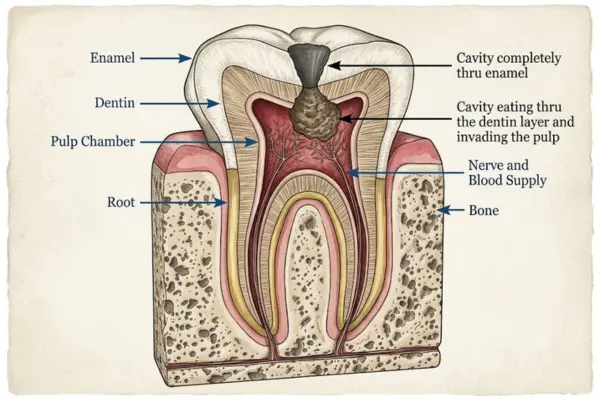
Not every toothache requires root canal treatment. The need for RCT depends on the condition of the dental pulp and the surrounding tissues.
Persistent tooth pain, prolonged sensitivity to hot or cold, pain while chewing and swelling around the gums may indicate a dental problem that requires examination.
Deep tooth decay is another common reason for root canal treatment. When bacteria reach the dental pulp, the tissue may become irreversibly inflamed or infected. In such cases – a regular filling may not be sufficient. Sometimes a tooth may develop an infection without causing significant pain. This is why a dental examination and appropriate X-rays are important for identifying the actual condition.
However, symptoms alone cannot confirm whether you need RCT.
For example: tooth sensitivity may also occur due to gum recession, enamel wear or other dental conditions.
Your dentist will evaluate your symptoms, examine the tooth and perform necessary diagnostic tests before recommending treatment.
Root Canal Treatment vs Tooth Extraction: Which Is Better?
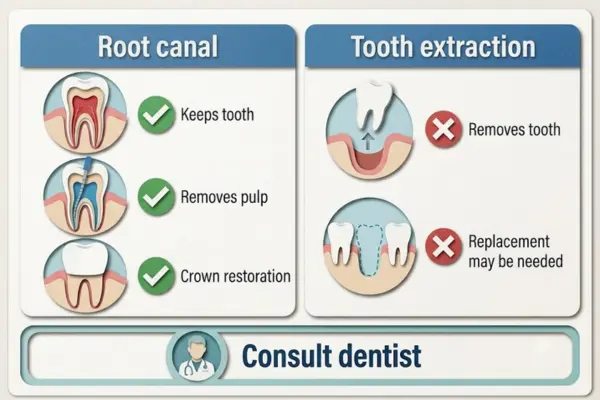
When a tooth is severely damaged or infected patients often have to decide between saving the tooth through RCT or removing it through extraction.
Both treatments have different purposes. Root canal treatment aims to preserve the natural tooth by removing the infected pulp. Tooth extraction removes the affected tooth completely.
If the tooth is restorable and has a reasonable prognosis RCT may help maintain your natural chewing function without requiring immediate tooth replacement. On the other hand – tooth extraction may be recommended when a tooth is severely broken and lacks sufficient healthy structure or cannot be properly repaired…
One important point to consider is the long-term cost. Extraction may initially appear less expensive but if the missing tooth needs replacement with a dental implant, bridge or removable prosthesis the total treatment cost may increase. Not every extracted tooth needs to be replaced immediately. It depends on the position of the tooth and the condition of the surrounding teeth as well as your chewing function and overall oral health.
Therefore, your dentist should recommend RCT or extraction based on your dental condition rather than just the treatment cost.
Is Root Canal Treatment Painful?
Many patients delay root canal treatment because they are worried about pain. Modern root canal treatment is usually done under local anaesthesia. This numbs the affected area and helps keep you comfortable during the procedure. Most patients feel some pressure or vibration during the treatment rather than sharp pain. You may experience some tenderness or discomfort after the procedure. This is more common when the tooth had an infection before treatment.
The discomfort usually gets better with time. Your dentist may recommend medication if needed. You will also receive instructions on eating and maintaining good oral hygiene after the treatment. If you experience severe pain or increasing swelling after the treatment then contact your dentist. You should also contact your dentist if you develop a fever or notice that your symptoms are getting worse.
How Many Appointments Are Required for RCT?
The number of appointments needed for root canal treatment depends on the condition of the tooth and the complexity of the procedure. Some simple cases can be completed in a single appointment. More complicated cases may require multiple visits. Severe infection or complex root anatomy may require additional treatment sessions. Persistent symptoms or a previously failed RCT may also require further treatment. The permanent crown may need a separate appointment after the tooth has been cleaned and restored. The tooth must also be prepared before the crown is placed.
Your dentist will explain the expected treatment schedule after examining your tooth.
How Long Does a Root Canal-Treated Tooth Last?
A tooth that has had a root canal can last for many years with proper restoration and good oral care. However its lifespan depends on several factors. These include the quality of the treatment and the amount of healthy tooth structure that remains. The type of restoration and your oral hygiene also play an important role. Your chewing habits can also affect how long the tooth lasts.
A dental crown can help protect a weakened tooth from further damage. However it does not make the tooth completely resistant to damage.
Regular dental check-ups are important to keep the tooth healthy. Problems such as cracks or reinfection can develop over time. The crown may also become damaged and require repair or replacement.
To maintain a root canal-treated tooth, brush twice daily with fluoride toothpaste, clean between your teeth regularly, avoid chewing extremely hard objects and follow your dentist’s instructions regarding the permanent restoration.
Can You Avoid Root Canal Treatment?
In some cases yes. If the dental pulp can still heal then your dentist may recommend a conservative treatment instead of RCT. For example if tooth decay has not caused irreversible damage to the pulp then removing the decayed portion and placing a dental filling may be enough. In selected cases vital pulp therapy may also help preserve the natural pulp tissue. The suitability of this treatment depends on the condition of the tooth.
However if the pulp is irreversibly damaged or infected then avoiding treatment may allow the infection to spread. This can lead to an abscess and increased pain. It may also cause swelling and can eventually result in tooth loss. Therefore, the goal should not be to avoid RCT at all costs. It should be to choose the least invasive treatment that can successfully address the dental problem.
How to Choose the Right Dental Clinic for Root Canal Treatment in Delhi?
Choosing a dental clinic should involve more than comparing treatment prices. Before undergoing RCT, understand the dentist’s qualifications, the diagnosis and the proposed treatment plan. Ask whether your tooth can be saved and why root canal treatment is being recommended. If the case is complicated, you can also ask whether consultation with an endodontist would be appropriate.
It is equally important to understand the complete treatment cost. Some clinics may quote only the RCT procedure, while the crown, restoration, X-rays or additional procedures may be charged separately. A reliable dental professional should explain the available treatment options, expected outcomes and limitations before starting the procedure.
If you are uncertain about whether RCT or extraction is necessary, seeking a second opinion can help you understand your options.
Frequently Asked Questions
What is the average root canal treatment cost with cap in Delhi?
The total cost depends on the type of tooth, treatment complexity and crown material. Private clinic prices vary, so patients should request an itemised estimate covering RCT and the final restoration.
Is a cap compulsory after root canal treatment?
No, a full crown is not compulsory for every RCT-treated tooth. However, teeth with significant structural damage, particularly molars often benefit from a crown or another form of cuspal protection.
Can I get root canal treatment without a cap?
Yes, selected teeth can be restored without a full crown. Your dentist may recommend a bonded restoration if sufficient natural tooth structure remains and the tooth can function safely with that restoration.
Which cap is suitable after RCT?
Zirconia, PFM, metal and all-ceramic crowns are commonly available options. The appropriate material depends on the tooth’s location, chewing forces, aesthetic requirements and remaining structure.
Is root canal treatment better than extraction?
If a tooth can be restored successfully, RCT may help preserve the natural tooth. However, extraction may be necessary when the tooth is severely damaged or has a poor prognosis.
Can an infected tooth heal without RCT?
It depends on the condition of the pulp. Some teeth may be suitable for pulp-preserving treatments but irreversible pulp damage generally requires root canal treatment or extraction.
What happens if I delay root canal treatment?
If an infected pulp is left untreated, the infection may progress and cause pain, swelling or an abscess. In some cases, the tooth may eventually become unsuitable for restoration.
Conclusion
Root canal treatment is a procedure that can help save a natural tooth affected by infection or irreversible pulp damage. However, it is not necessary for every toothache and the right treatment depends on an accurate diagnosis.
When considering the root canal treatment cost with cap in Delhi, remember that the complete treatment may include RCT, restoration and a dental crown. The type of tooth, severity of infection and crown material all influence the final cost.
If your dentist recommends RCT, ask whether your tooth is restorable, whether a crown is necessary and what alternatives are available. Understanding these factors will help you make an informed decision about your dental health.
The most important goal is not simply to save a tooth or reduce the immediate treatment cost but to choose a treatment that supports your long-term oral health.