Missing a tooth can affect much more than your appearance. This can make it difficult for you to chew food and may also alter the way you speak. It can affect the alignment of surrounding teeth and reduce your confidence regarding your smile.
Dental implants are one of the most established options for replacing missing teeth. Dental implants provide a fixed foundation for replacement teeth unlike removable dentures. It can perfectly replicate the appearance and feel of a real tooth.
Choosing the right professional is a crucial part of this process. If you are searching for the “best dental implantologist in Delhi” do not make your decision based only on a clinic’s location, online reviews or the lowest quoted price.
Factors such as qualifications, expertise, treatment planning, implant-related training, aesthetics and patient care should be considered.
What Are Dental Implants?
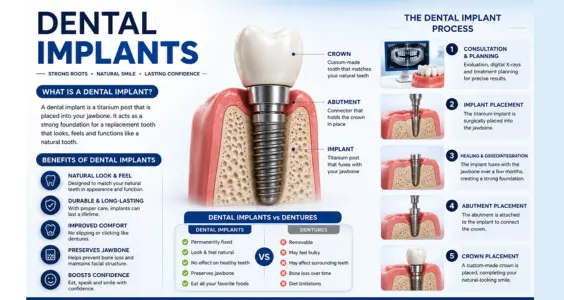
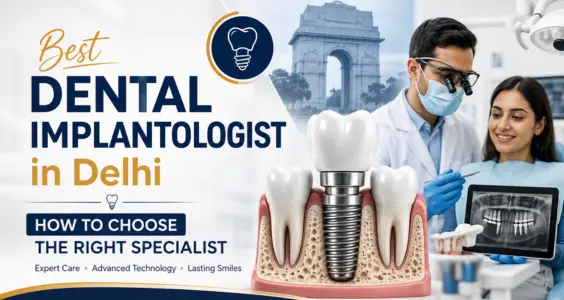
A dental implant is a small device surgically placed into the jawbone to serve as an artificial tooth root. It is often made of titanium. Once the implant fuses with the surrounding bone it can be used to support a crown, bridge or other dental restorations.
The aim is to replace a broken tooth with one that preserves both its appearance and functionality.
Dental implants have many benefits.:
- They are fixed rather than removable.
- They can provide a strong foundation for the replacement teeth.
- They can help restore chewing function.
- They can be designed to blend with the surrounding teeth.
- They do not require the same type of daily removal as conventional dentures.
- They can help restore the appearance of a complete smile.
Generally it is essential that the final restoration matches the shape, size and color of the patient’s existing teeth. Various types of dental crowns and restorative materials can be used depending on the specific case.
Why Choose Dental Implants for Missing Teeth?
Adjacent teeth may gradually shift to fill the space left by a lost tooth. Depending on the circumstances this can affect biting ability and the normal functioning of the teeth.
When a tooth is lost the surrounding teeth can gradually shift into the empty space.
Depending on the location and circumstances this may affect the bite and overall dental function.
Dental implants offer a fixed replacement option that can be designed to fit into the existing dental structure.
They may be considered for:
- A single missing tooth
- Multiple missing teeth
- Teeth that are severely damaged and cannot be saved
- Tooth replacement where a fixed solution is preferred
- Certain cases involving multiple-tooth rehabilitation
Who Is Suitable for Dental Implants?
Several factors determine whether dental implants are suitable for you. Your implant expert or dentist can assess these aspects:
Adequate Bone Support
Placing an implant requires sufficient support from the jawbone. The quantity and quality of the available bone are crucial.
If there is insufficient bone then additional procedures may be considered before placing the implant. After a proper clinical and radiographic examination it can be determined whether such treatment is necessary.
Healthy Gums and Oral Hygiene
Good oral hygiene is an important part of successful implant care.
Regular brushing, flossing, professional dental cleaning when required and appropriate follow-up can help maintain the health of the tissues around an implant.
General Health
Your general medical condition and dental history should also be considered before treatment. Certain medical conditions, medications and lifestyle factors may influence implant treatment planning and healing.
This is why a proper oral examination and consultation should always be carried out before deciding on dental implant treatment.
Types of Dental Implants and Implant-Supported Solutions
Different implant approaches may be used depending on the patient’s bone condition number of missing teeth and overall treatment requirements.
Endosteal Implants
Endosteal implants are placed directly into the jawbone. They are the most commonly used type of dental implant and are designed to function as an artificial tooth root.
Subperiosteal Implants
Subperiosteal implants are positioned on or above the jawbone and beneath the gum tissue. These have been considered in situations where conventional implant placement may be difficult because of limited bone support. Modern treatment planning may involve other alternatives depending on the individual case.
Implant-Supported Dentures
Dental implants can also be used to provide additional support and stability for certain removable dentures.
The appropriate approach depends on the patient’s dental condition and should be determined after an examination.
What Is the Dental Implant Procedure Like?
Many patients feel nervous when they hear the word “implant surgery.”
In reality-
The procedure is carefully planned and is commonly performed using local anaesthesia. The treatment generally involves several stages.
1. Dental Examination and Consultation
The dentist first examines your teeth, gums, bite and the area where the tooth is missing.
Diagnostic imaging may also be recommended to evaluate the underlying bone and surrounding structures.
2. Treatment Planning
After assessing your oral health the dentist develops an individual treatment plan.
The plan may involve replacing one tooth, several teeth or supporting a larger restoration.
3. Implant Placement
The implant is surgically placed into the jawbone under appropriate anaesthesia. The exact duration varies depending on the number and complexity of implants being placed.
4. Healing and Osseointegration
Following implant placement, the implant needs time to integrate with the surrounding bone. This biological process is known as osseointegration.
The healing period differs between patients and depends on several clinical factors.
5. Placement of the Final Restoration
Once the implant has adequately integrated and the dentist determines that it is ready a crown, bridge or other restoration can be placed.
In many conventional implant cases, the final restoration may be completed approximately 3 to 6 months after implant placement although the timeline can vary considerably depending on the individual case.
What Are Immediate Loading Dental Implants?
You may have heard the term immediate loading implants while researching dental implants in Delhi.
Immediate loading refers to situations where a provisional or final restoration is attached to an implant shortly after implant placement sometimes on the same day.
However, this approach is not suitable for every patient. It depends on factors such as implant stability, bone quality, location of the implant, bite forces and the overall treatment plan.
Your dentist can determine whether immediate loading is appropriate for your specific case.
Are Dental Implants Painful?
Dental implant placement is generally performed under local anaesthesia, which helps control discomfort during the procedure.
Some soreness, swelling or discomfort can occur after treatment, particularly during the initial healing period. Your dental professional will provide appropriate aftercare instructions based on your procedure.
The experience can vary depending on the complexity of treatment and the individual patient.
How Long Does a Dental Implant Procedure Take?
The duration of an implant procedure depends on the number of implants, the location of the missing tooth, the patient’s bone condition and whether additional procedures are required.
In straightforward cases-
Implant placement itself can be relatively quick. More complex cases may require additional planning or treatment.
Therefore, it is better to ask your dentist about the expected treatment time after your examination rather than relying on a fixed duration.
Cases Where Dental Implants May Be Considered
Dental implants may be an option for patients experiencing:
- Missing teeth
- Severely damaged or broken teeth that cannot be restored
- Tooth loss affecting chewing
- Multiple missing teeth
- Certain situations where a fixed tooth replacement is preferred
A missing tooth should not be replaced based solely on appearance. Your dentist should evaluate the surrounding teeth, gums, jawbone, bite and overall oral health before recommending treatment.
How to Choose the Best Dental Implantologist in Delhi?
Delhi has many dental professionals offering implant treatment. So how do you identify the right specialist for your needs?
Instead of focusing only on the phrase “best dental implantologist in Delhi” consider the following factors.
Check Qualifications and Training
Look at the dentist’s educational background and additional certifications relevant to implantology, restorative dentistry, orthodontics or related areas.
Relevant training can provide useful insight into the dentist’s professional expertise.
Consider Clinical Experience
Experience matters particularly when treatment involves multiple teeth or aesthetic areas or complex bite relationships or implant-supported rehabilitation.
Ask about the dentist’s experience with cases similar to yours.
Look Beyond the Implant
A dental implant is not an isolated tooth. Its position needs to work with your bite, surrounding teeth, gums and smile.
A dentist with an understanding of orthodontics and smile design can consider these factors as part of the overall treatment plan.
Ask About the Treatment Plan
A good consultation should explain:
- What treatment is being recommended
- Why it is being recommended
- What alternatives may be available
- How many appointments may be required
- Expected healing time
- The type of restoration planned
- Follow-up and maintenance requirements
Don’t Choose Only on Price
Dental implant costs can vary depending on the implant system, restoration, number of implants, complexity of the case, diagnostic requirements and any additional procedures.
An unusually low price should not be the only reason for choosing a dental professional.
The quality of diagnosis, treatment planning, materials, clinical expertise and long-term follow-up should also be considered.
Meet Dr. Aval Luthra

For patients looking for an experienced dental professional in Delhi NCR for implant-related treatment along with orthodontic and smile-focused care.
Dr. Aval Luthra brings a multidisciplinary background to treatment planning.
Dr. Aval Luthra is a Leading Orthodontist & Smile Design Specialist with qualifications of BDS and MDS in Orthodontics.
His areas of professional expertise include:
- Orthodontics
- Invisalign treatment
- Braces and aligners
- Dentofacial orthopedics
- Smile designing
- Dental implants
- Implant-supported dental rehabilitation
His patient-centric approach combines clinical precision, technology and aesthetics to create treatment plans based on individual dental needs.
Dr. Aval Luthra’s Experience and Qualifications
Dr. Aval Luthra has:
His academic and professional training includes:
- BDS – BVP Dental College, Pune
- MDS Orthodontics – Saveetha Dental College
- Aesthetic Dentistry Certification – Manipal University
- Oral Implantology Certification – Manipal University
This combination of orthodontic, aesthetic and implant-related training can be particularly relevant when treatment requires consideration of both dental function and smile aesthetics.
Dr. Aval Luthra’s Core Expertise
Invisalign Treatment
Invisalign uses a series of clear aligners to gradually move teeth into planned positions. Treatment suitability depends on the patient’s orthodontic condition.
Braces & Aligners
Different orthodontic options can be considered depending on alignment, bite, age, treatment goals and clinical requirements.
Smile Designing
Smile design focuses on the relationship between teeth, gums, facial features, proportions and aesthetics to create a harmonious smile.
Dental Implants
Dental implants can be used to replace missing teeth when clinically appropriate. Treatment planning considers the implant position, surrounding teeth, bite, bone, gums and final restoration.
Professional Experience
Dr. Aval Luthra has also served as an ex-consultant at:
- Apollo Clinic Gurgaon
- Fortis Memorial Research Institute
- Artemis Hospital
- Asian Institute of Medical Sciences
His professional experience includes working with patients requiring advanced orthodontic and dental solutions.
Dental Implants and Smile Aesthetics
For a tooth located toward the front of the mouth, appearance can be just as important as function.
The final result needs to blend with the neighbouring teeth in terms of:
- Shape
- Size
- Colour
- Position
- Proportion
- Overall smile appearance
This is where an understanding of smile design can become especially valuable.
Dr. Aval Luthra’s background in orthodontics and smile designing, along with his expertise in dental implants and implant-supported dental rehabilitation, allows these factors to be considered when appropriate for the patient’s treatment.
How Much Do Dental Implants Cost in Delhi?
One of the most common questions patients ask is: “What is the cost of dental implants in Delhi?”
There is no single price that applies to every patient.
The overall cost can depend on:
- Number of implants required
- Type and brand of implant system
- Type of dental crown or restoration
- Bone condition
- Need for additional procedures
- Diagnostic imaging
- Complexity of the case
- Experience and expertise of the treating dental professional
- Follow-up and restoration requirements
For this reason:
It is better to get a personalised treatment estimate after a dental examination rather than choosing a clinic solely because it advertises the lowest implant cost.
Are Dental Implants Worth It?
For an appropriate candidate dental implants can provide a fixed solution for replacing missing teeth and can restore both chewing function and smile aesthetics.
The success of treatment depends on several factors, including appropriate case selection, treatment planning, surgical technique, oral hygiene, healing and long-term maintenance.
Dental implants also require regular care. Although they are not natural teeth, the tissues around them still need proper cleaning and professional dental monitoring.
Dental Implant Maintenance
Taking care of your dental implant does not end when the crown is fitted.
Good oral hygiene remains important.
Patients should generally:
- Brush regularly
- Clean between teeth as recommended
- Follow their dentist’s implant-care instructions
- Attend regular dental check-ups
- Get professional cleaning when recommended
- Inform their dentist about any discomfort, swelling, bleeding or changes around the implant
Good maintenance can help support the long-term health of the implant and surrounding tissues.
Frequently Asked Questions About Dental Implants in Delhi
Who is the best dental implantologist in Delhi?
The right dental implantologist depends on your individual dental condition and treatment requirements. When choosing a specialist, consider qualifications, implant-related training, clinical experience, treatment planning, aesthetics, technology and patient care.
Are dental implants better than dentures?
Dental implants and dentures are different treatment options. Implants are fixed into the jawbone and can support crowns, bridges or implant-supported dentures, while conventional dentures are removable. Your dentist can recommend the appropriate option based on your oral health and treatment needs.
Can a broken tooth be replaced with a dental implant?
If a tooth is severely damaged and cannot be restored, extraction followed by dental implant treatment may be considered. However, the decision depends on whether the tooth can be saved and the condition of the surrounding bone and gums.
How long does a dental implant take?
The overall treatment time varies. Some cases can be completed relatively quickly, while conventional implant treatment may require several months because the implant needs time to integrate with the jawbone before the final restoration is placed.
Can dental implants be placed in one day?
In selected cases, immediate implant placement or immediate loading may be possible. However, same-day treatment is not appropriate for everyone. A detailed examination is required to determine whether you are a suitable candidate.
Are dental implants painful?
Implant placement is generally performed under local anaesthesia. Patients may experience some soreness or swelling during the healing period, but the level of discomfort varies from person to person and depends on the complexity of the procedure.
How should I choose a dental implant specialist in Delhi?
Look for relevant qualifications, implant-related training, clinical experience, a personalised treatment plan, appropriate diagnostic evaluation and clear communication about treatment options, costs, risks, healing and follow-up care.
Choose Experience, Planning and Personalised Care
Finding the best dental implantologist in Delhi is not simply about finding someone who offers dental implants. The right professional should take the time to understand your dental condition and develop a treatment plan that considers function, aesthetics, oral health and your individual expectations.
Dr. Aval Luthra combines 25+ years of experience, specialist orthodontic training, smile-design expertise and training in oral implantology. With 5,000+ smiles designed, experience as an Invisalign Provider and Dental Implant Provider, and professional experience with leading hospitals and clinics, his approach focuses on precision, technology, aesthetics and patient-centred care.
If you have a missing tooth or are considering dental implants in Delhi, a professional consultation is the best way to understand whether implants are suitable for you and what treatment options are available.
Ready to Restore Your Smile?
Book a consultation with Dr. Aval Luthra to discuss your dental implant and smile restoration needs.